Why Your Furnace Keeps Turning On and Off: A Homeowner’s Guide for Elyria, OH
The biting winds coming off Lake Erie in Northeast Ohio require a heating system that operates with robotic precision. When you are sitting in your living room in Elyria or North Ridgeville and you notice your furnace kicks on, runs for three minutes, and then abruptly shuts down—only to restart five minutes later—it is more than just a minor annoyance. This phenomenon is known as "short cycling," and it is one of the most common issues homeowners face during the peak of winter.
At B Rico Mechanical, LLC, we understand that a malfunctioning furnace isn't just about discomfort; it’s about the safety of your family and the efficiency of your home. Short cycling puts an immense amount of strain on your system’s components, leading to higher energy bills and premature equipment failure. In this comprehensive guide, we will break down why your furnace might be turning on and off, what you can check yourself, and when it is time to bring in the professionals.
Understanding Furnace Short Cycling
Before diving into the causes, it is important to understand what a "normal" furnace cycle looks like. Under typical winter conditions in Lorain or Amherst, a furnace should run for roughly 10 to 15 minutes before reaching the desired temperature on your thermostat. It then rests until the home’s temperature drops below the set point.
Short cycling occurs when the heating cycle is terminated prematurely. Because the furnace shuts off before the house is actually warm, the thermostat quickly signals for heat again, creating a relentless cycle of starting and stopping. This is particularly problematic because the startup phase of a furnace is when it consumes the most energy and experiences the most mechanical wear and tear.
Common Causes of Furnace Short Cycling
There is rarely a single "magic" reason for a furnace to behave this way. Instead, several variables—ranging from simple maintenance issues to complex mechanical failures—could be the culprit.
1. The Dirty Air Filter (The Most Common Culprit)
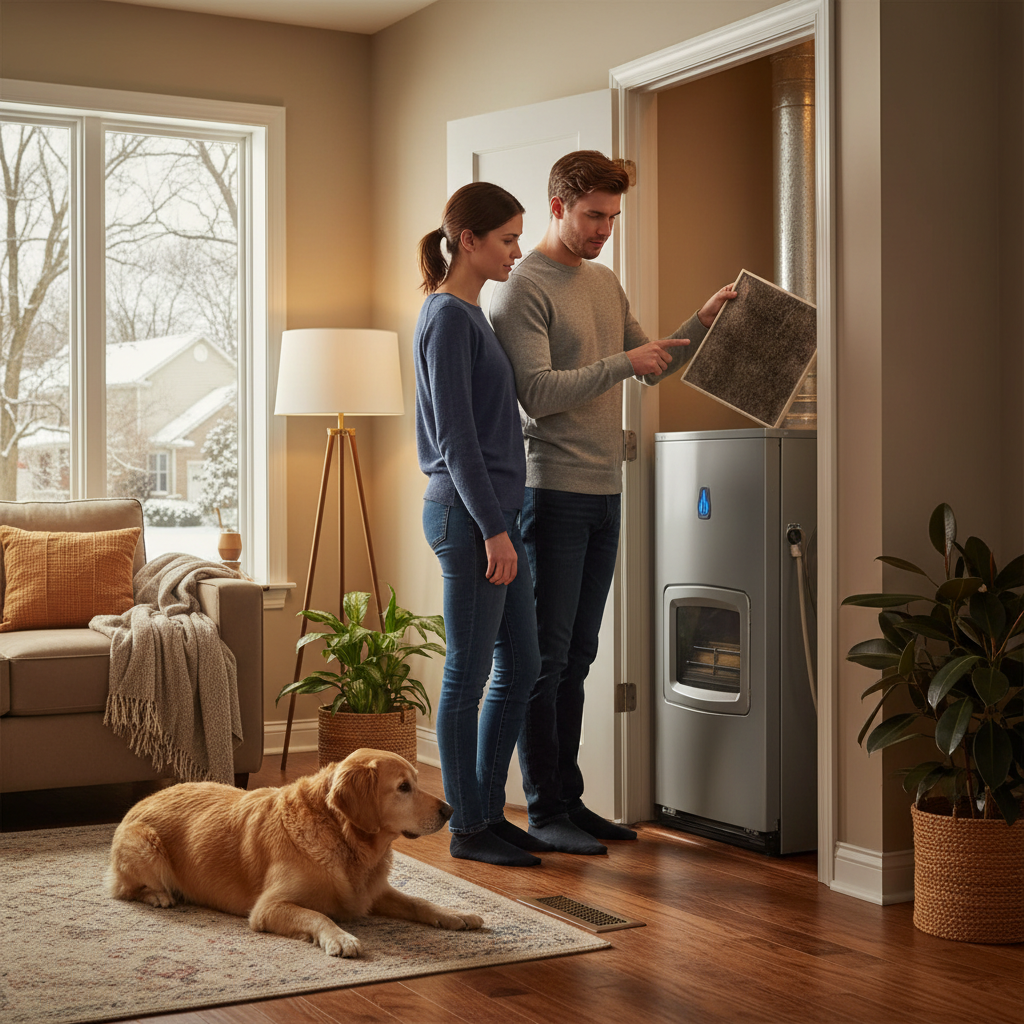
Many homeowners underestimate the importance of a clean air filter. Your furnace requires a constant, steady flow of air to operate safely. If the filter is clogged with dust, pet hair, or debris, the blower motor has to work harder to pull air through.
When airflow is restricted, the heat exchanger inside the furnace can quickly become too hot. To prevent the unit from cracking or catching fire, a safety component called the limit switch will shut the system down. Once the unit cools off, it tries to start again, resulting in a short cycle. Regular maintenance and heating system inspections are the best ways to prevent this.
2. Thermostat Issues and Placement
Sometimes the furnace is fine, but the "brain" of the operation is confused. If your thermostat is located near a heat source—such as a space heater, a sunny window, or a kitchen oven—it may think the house is much warmer than it actually is. It shuts the furnace off, only to realize seconds later that the rest of the house is freezing, causing it to kick back on.
Furthermore, old batteries or loose wiring in the thermostat can cause intermittent signals, leading to erratic behavior. If you have an older thermostat, it might be time to consider an upgrade to improve your home’s energy efficiency and air quality.
3. A Dirty Flame Sensor
The flame sensor is a small, thin metallic rod located near the burners. Its job is to detect whether a flame is present when the gas valve is open. This is a critical safety feature; if there is gas but no flame, the gas could build up in your home.
Over time, this sensor can become coated in carbon soot or oxidation. When this happens, it fails to "see" the flame properly. The furnace will light, run for a few seconds, and then the sensor will signal the system to shut down because it thinks the burners failed to ignite. Cleaning or replacing a flame sensor is a standard part of professional furnace repair and maintenance.
4. Overheating and the Limit Switch
As mentioned with air filters, the limit switch is a safety device designed to shut down the furnace if internal temperatures exceed safe levels. However, if your limit switch itself is faulty, it may "trip" even when the furnace isn't actually overheating. Dealing with electrical safety components and high-voltage switches is something that should always be handled by a technician from B Rico Mechanical, LLC.
5. Blocked Exhaust Vents
Your furnace produces combustion gases (including carbon monoxide) that must be vented out of your home. In Northeast Ohio, it is not uncommon for snow, ice, or even bird nests to block the exterior PVC vent pipes or the chimney flue. If the exhaust cannot escape, the furnace will shut down to prevent dangerous gases from backing up into your living space.
The Risks of Ignoring a Short Cycling Furnace
It can be tempting to ignore a furnace that is "mostly" working, especially if you are still getting some heat. However, letting this problem persist in your Avon or North Ridgeville home can lead to serious consequences:
- Sky-High Energy Bills: Your furnace uses the most electricity and gas during the startup phase. If it starts four times an hour instead of once, your utility bills will reflect that.
- Premature System Failure: The constant expansion and contraction of the heat exchanger, combined with the stress on the blower motor, can shave years off your furnace’s lifespan.
- Inconsistent Comfort: Short cycling prevents proper air circulation. You will likely find that some rooms are freezing while others are stifling.
- Safety Hazards: Short cycling is often a symptom of overheating or venting issues, which can ultimately lead to cracked heat exchangers or carbon monoxide leaks.
What Should Homeowners Check First?
Before you pick up the phone to call B Rico Mechanical, LLC, there are a few simple troubleshooting steps you can take. These steps may save you a service call or, at the very least, help you provide more information to our technicians.
- Check the Filter: This is the number one fix. If the filter is dark, gray, or caked in dust, replace it immediately.
- Inspect the Thermostat: Ensure it is set to "Heat," the batteries are fresh, and there are no heat sources nearby tricking the sensor.
- Look at the Vents: Take a walk around the exterior of your house in Elyria or Lorain. Ensure the exhaust pipes are clear of snow, ice, and debris.
- Check the Air Registers: Make sure at least 80% of your supply and return vents inside the house are open and not blocked by furniture or rugs. Closing too many vents can actually cause the system to overheat.
Why HVAC Sizing Matters
If you have recently moved into a home or had a new unit installed and it has short cycled from day one, the issue might be the size of the unit itself. Some homeowners believe that "bigger is better" when it comes to heating, but an oversized furnace is a major problem.
An oversized furnace will heat up a small home so quickly that it reaches the thermostat setting before it has even finished a full cycle. This leads to rapid on-off switching and prevents the system from properly dehumidifying or filtering the air. If you suspect your system is improperly sized, B Rico Mechanical, LLC can perform a "Manual J" load calculation to determine the exact heating needs of your Lorain County residence.
When to Contact B Rico Mechanical, LLC
While changing a filter is a great DIY task, most furnace repairs involve high-voltage electricity, natural gas, and complex electronics. You should contact B Rico Mechanical, LLC immediately if:
- You smell gas (rotten eggs) or see any smoke.
- You hear loud banging, screeching, or rattling sounds when the unit starts.
- Replacing the filter did not stop the short cycling.
- The furnace continues to shut off after only a few seconds of operation.
- Your carbon monoxide detector goes off.
Our team serves Elyria, Lorain, Avon, North Ridgeville, and Amherst with professional heating solutions. Whether you have a traditional gas furnace, a heat pump system, or even a specialized geothermal unit, we have the expertise to diagnose the root cause of your short cycling and restore comfort to your home.
Professional Maintenance Prevents Issues
The best way to handle short cycling is to prevent it from happening in the first place. Seasonal maintenance is more than just a "clean and check." It’s an opportunity for a technician to:
- Clean the flame sensor and burners.
- Test the limit switches and safety controls.
- Inspect the heat exchanger for dangerous cracks.
- Optimize the blower motor for proper airflow.
- Ensure your water heater and other combustion appliances are venting correctly alongside your furnace.
By investing in regular care, you ensure that your system is ready for the harsh Ohio winters, keeping your family warm and your energy bills predictable.
Trust the Experts at B Rico Mechanical, LLC
Don't let a short-cycling furnace leave you out in the cold. If your heating system is frustrating you with constant starts and stops, let the experts at B Rico Mechanical, LLC provide the professional diagnosis and repair you need. We are committed to providing reliable, honest service to our neighbors in Elyria and the surrounding communities.
Whether you need a simple filter replacement or a comprehensive heating repair, our team is standing by to help.
Contact Us Today:
Phone: (440) 309-9709 Email: brico@bricomechanical.com
Schedule today on our calendar
We look forward to keeping your home comfortable in Elyria, Lorain, Avon, North Ridgeville, and Amherst!