Why Your AC Is Leaking Water Inside Your Home: A Homeowner’s Guide
Finding a puddle of water around your indoor unit is one of those moments that can cause instant stress for any homeowner. In North Ridgeville, Avon, and throughout Lorain County, our summers can get incredibly humid. During these months, your air conditioning system is working overtime to keep you cool and dry. While it is normal for your AC to produce some moisture as it dehumidifies your home, that water should never end up on your floor or leaking through your ceiling.
Understanding the Condensation Process
To understand why your AC is leaking, it helps to understand how it works. Your air conditioner doesn’t just cool the air; it removes moisture. As warm, humid air from your home passes over the cold evaporator coil, the moisture in the air condenses into liquid water—much like sweat on a cold glass of lemonade on a hot Elyria afternoon.
Under normal circumstances, this water (condensate) drips off the coils into a drain pan and flows through a PVC pipe (the condensate drain line) to the outside of your home or into a floor drain. When something goes wrong in this sequence, you end up with a leak. At B Rico Mechanical, LLC, we see this issue frequently during the peak of the cooling season. Understanding the source of the leak is the first step toward protecting your home from water damage.
Common Causes of Indoor AC Water Leaks
There are several reasons why water might be escaping your HVAC system. Some are simple fixes, while others indicate a more significant mechanical failure within your cooling system.
1. Clogged Condensate Drain Line
This is perhaps the most common cause of a leaking AC unit. Over time, the moisture inside your drain line can facilitate the growth of algae, mold, and fungi. Dust and debris can also build up, creating a thick sludge that creates a blockage. When the line is clogged, the water has nowhere to go but back up into the drain pan. Once the pan overflows, you have a leak inside your home.
2. A Cracked or Rusted Drain Pan
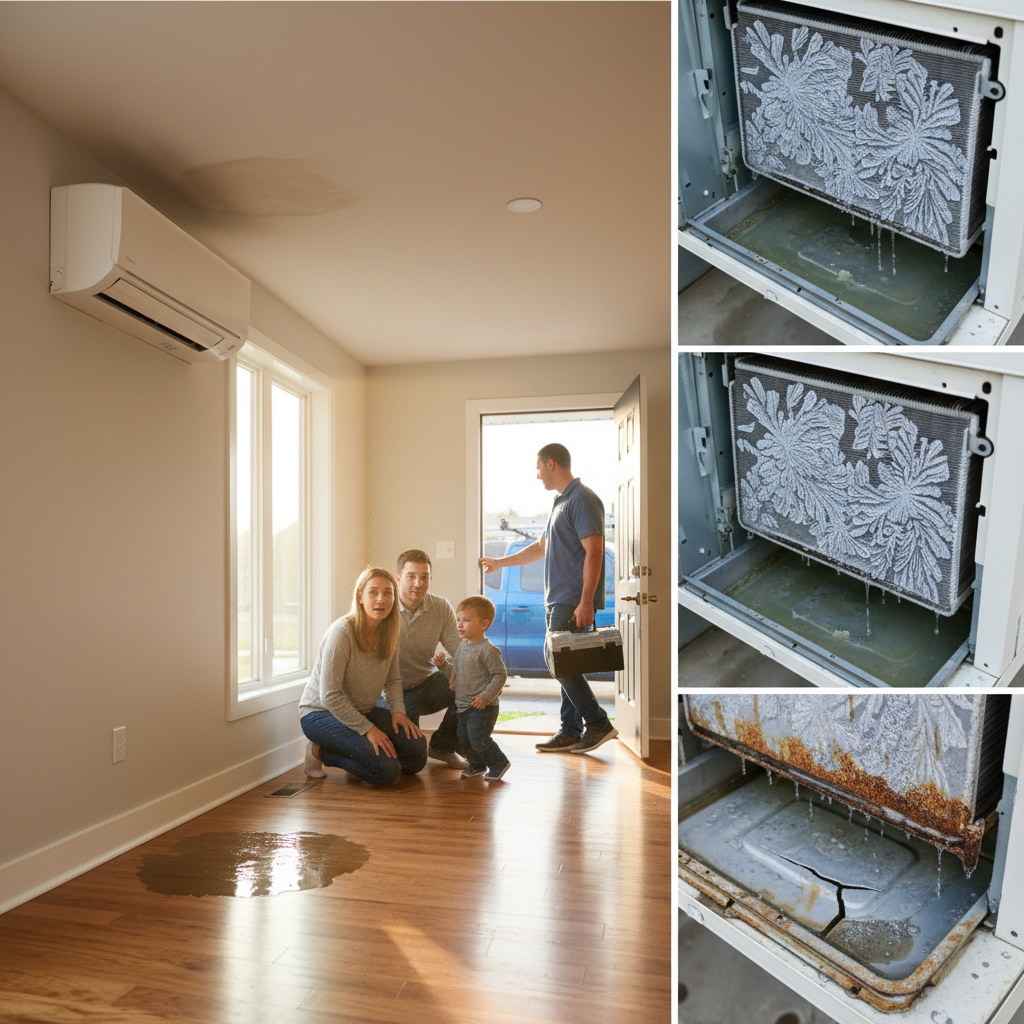
In older HVAC systems, the primary drain pan is often made of metal. Over years of exposure to water, these pans can rust through. Even a tiny pinhole or a crack in a plastic pan can lead to a steady drip. If your unit is located in an attic or a crawlspace, these leaks can go unnoticed until they cause significant structural damage to your ceiling or floorboards.
3. Frozen Evaporator Coils
If you notice ice on your indoor unit along with the water leak, you have a frozen evaporator coil. When the coil gets too cold, the condensation on it freezes into a block of ice. As that ice melts, it often does so too quickly for the drain pan to handle, or it melts in a way that bypasses the pan entirely.
A frozen coil is usually caused by one of two things:
- Restricted Airflow: A dirty air filter or blocked vents prevent warm air from reaching the coil.
- Low Refrigerant: If your system is leaking refrigerant, the remaining liquid can become too cold, causing the moisture on the coil to freeze.
4. A Malfunctioning Condensate Pump
If your furnace or air handler is located in a basement where the water cannot drain by gravity, your system uses a condensate pump to push the water outside. If the motor in this pump fails or the float switch gets stuck, the tank will overflow, leading to a mess on your basement floor.
What Homeowners Should Check First
If you discover water around your unit in Amherst or Lorain, don’t panic. There are a few things you can check yourself before calling in the professionals at B Rico Mechanical, LLC.
- Check Your Air Filter: A clogged, dirty filter is the leading cause of many HVAC issues. If your filter is caked in dust, it restricts airflow, which can lead to frozen coils and subsequent leaking. Replace your filter and see if the icing subsides.
- Inspect the Drain Pan: Use a flashlight to look at the pan underneath your indoor coil. Do you see standing water? If the pan is full, the drain line is likely clogged. If the pan is dry but there is water on the floor, look for cracks or rust spots in the pan itself.
- Look at the Drain Line Exit: Locate where your drain line exits your home (usually near the outdoor condenser unit). If the system is running but you don’t see any water dripping from the end of the pipe, the blockage is definitely inside.
- Turn the System Off: If you see a significant leak, the best thing you can do is turn the AC off at the thermostat. This prevents more water from being produced while you wait for a technician to arrive.
The Risks of Ignoring an AC Leak
It can be tempting to just put a towel down and hope the problem goes away, but water leaks in an HVAC system can lead to serious consequences if left unaddressed.
Mold and Mildew Growth
Northeast Ohio can be incredibly humid. When you combine that humidity with standing water inside your home or ductwork, you create the perfect breeding ground for mold. This can negatively impact your indoor air quality and cause respiratory issues for your family.
Structural Damage
Water is incredibly destructive. A leak from an attic unit can rot through ceiling joists and destroy drywall. In a basement, persistent moisture can damage flooring, baseboards, and anything stored near the furnace.
Electrical Hazards
Your air conditioner is an electrical appliance. If water leaks onto sensitive electrical components or wiring, it can cause short circuits, blow fuses, or even damage the expensive control boards within your system.
Preventive Maintenance: Your Best Defense
The most effective way to prevent water leaks is through regular professional maintenance. During a standard cooling tune-up, the technicians at B Rico Mechanical, LLC perform several tasks designed to prevent these exact issues.
We inspect the condensate drain line to ensure it is clear of obstructions. We also check the condition of the drain pan and test any condensate pumps. Furthermore, we monitor refrigerant levels and clean the evaporator coils to ensure proper heat transfer, which prevents the system from freezing up.
For homeowners in Avon and North Ridgeville, a spring maintenance visit is the best way to ensure your heat pump system or traditional central air unit is ready for the heat.
When to Call B Rico Mechanical, LLC
While changing an air filter is a great first step, most causes of AC leaks require a professional touch. Attempting to clear a drain line with high-pressure air or chemicals can sometimes cause more damage if not done correctly. Furthermore, if the leak is caused by low refrigerant levels, you need a licensed technician to find the leak and recharge the system according to EPA regulations.
You should contact B Rico Mechanical, LLC immediately if:
- The leak persists after you have changed the air filter.
- You see ice forming on the copper lines or the indoor coil.
- The drain pan is rusted through or visibly cracked.
- You hear your condensate pump running constantly or making loud grinding noises.
- You smell a "musty" or "dirty sock" odor coming from your vents.
Our team is dedicated to providing reliable, expert service to our neighbors in Elyria and the surrounding communities. We understand local weather patterns and how they affect your home's comfort systems. Whether it is a simple clog or a more complex heating and cooling issue, we have the tools and experience to diagnose the problem accurately.
A Note on Newer High-Efficiency Systems
If you have a high-efficiency furnace or AC system, you might notice more moisture than you did with an older unit. High-efficiency systems are designed to extract as much moisture as possible to improve comfort. However, this also means the drainage system is under more "stress." These systems often include safety switches (float switches) that will shut the entire system down if water is detected in the pan. If your AC suddenly stops running and won't turn back on, check your drain pan—it might have saved you from a flood!
Protecting Your Home Investment
Your home is likely your largest investment. Keeping your HVAC system in peak condition is essential for protecting that investment. From ensuring your water heater is operating safely to maintaining your central air, B Rico Mechanical, LLC is here to help.
We believe in transparency and helping our customers understand their systems. A leaking AC is often a symptom of a maintenance need that has been overlooked. By addressing these issues early, you can avoid the high costs of water damage restoration and emergency repairs.
Contact B Rico Mechanical, LLC Today
Don't let a small leak turn into a major headache. If your air conditioner is leaking water inside your home in Elyria, Lorain, Avon, North Ridgeville, or Amherst, reach out to the pros. We will get your system back in top shape so you can enjoy a cool, dry, and comfortable home all summer long.
Phone: (440) 309-9709 Email: brico@bricomechanical.com